Showing posts with label Biographical. Show all posts

Wednesday, December 8, 2010

Albert Fuller and Hugues Cuenod

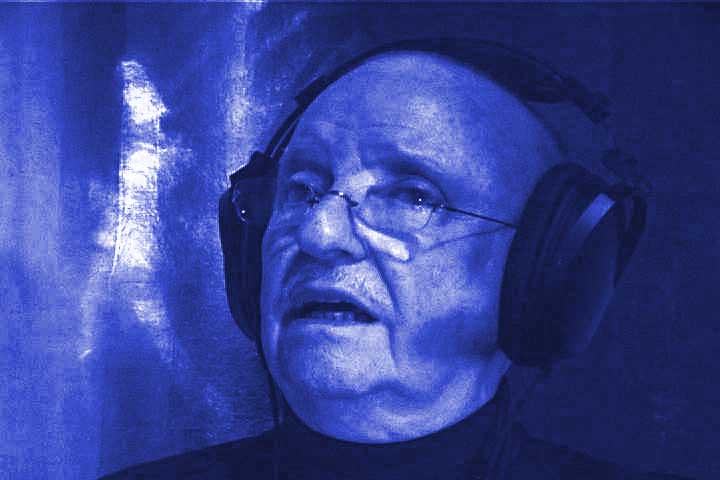
The legendary Swiss tenor Hugues Cuenod died on Friday (Dec. 3rd). I've posted a reminiscence on my blog, but wanted to add some photos of Albert and Huguie here, as well as some words about Huguie by Albert. The photos are either from Huguie's archive, or pictures I took when Albert and I visited Huguie in Morges in 2002 - the Cuenod centenary. Words are from the Translator's Note of Hugues Cuenod with an Agile Voice: Conversations with Francois Hudry, which Albert translated from the French in 1999. 

But first these words about Albert by Huguie, in the fifth of the conversations with Hudry:

The harpsichordist Albert Fuller...is one of my best friends. He is the most French of Americans. He knows Rameau and Lully at the ends of his fingers and lives his life constantly in the culture and the spirit of France. He used to load his harpsichord in a large station wagon and we crossed the country giving numerous concerts in many little and some large American cities. He is a very funny friend with whom I've enjoyed many amusing hours.


(AF) I first heard the riveting voice of Hugues Cuenod in New York in 1945; it was borne to my ear by the 1938 Parisian recording of Francois Couperin's Troisieme Lecon de Tenebres of 1714; it was also my introduction to the vocal works of Couperin. That combination of voice and composer remains to this day one of the unique pinnacles of my experience as a musician. The enduring power of Jeremiah's ancient, finger-wagging words, combined with the communicative musical power of Grand Siecle French classicism, was shocking in the extreme, perhaps especially because the entire experience opened a new door of expression, one I never knew existed.


As a graduate student at Yale in the early 1950s, I purchased Cuenod's Westminster recording of all three of Couperin's magnificent Lecons. These performances...bowled me over once again by their uncanny intensity. And then, Cuenod's bio on the jacket contained a striking sentence of hitherto unconsidered thought, at least by me. It read "Mr. Cuenod explains his artistic goal in these words: 'Though I earn my living by music I am not a professional who thinks primarily of business. I prefer the Epicurean way, to choose what is most interesting and musically rewarding.'" [Italics AF]


Well--this particular, and very personal idea so touched me that I began to understand how it resonated with my own still-green, graduate-student heart. Yet, I hadn't the slightest notion of how to realize such an ambition, or of even quite comprehending what his words had meant. As each of our lives represents in its own way a straight line, beginning with hindsight, it seems clear that the lines of Cuenod's and my life should one day intersect, at least professionally. 


When that happened, it was also clear that we were to become friends, and later, when we toured together as a duo, it was even clearer that our spirits meshed when we were most vulnerable as artists, that is, when we performed together in public. Neither of us did anything the same way twice. Since my part of our performances was all improvised, I could mirror the smallest new ideas that his performance would suggest to me. On the other hand, he, hearing everything I did, was always receptive to the new hints of interpretation that my accompaniments might suggest. Performing thus with him before our various publics resulted in the greatest musical fun, and transports de joie I ever experienced; my memory of that is as strong today as ever.


Albert at Huguie's 100th birthday party, Theatre de Vevey, June 2002


Wednesday, December 3, 2008

The young Albert Fuller in the Washington National Cathedral


Albert Fuller as the angel with flaming feet in John de Rosen's mural 
in the Washington National Cathedral's Chapel of St. Joseph of Arimathea:
"The Entombment of Christ" (photo credit: Moon)


Oct. 31 brought the Washington, DC premiere of Apparition of the Eternal Church, the Messiaen film of which Albert is both star and muse. The following day, I played, with pianist Jerome Lowenthal, the DC premiere of Messiaen's newly published violin and piano Fantaisie along with the other two Messiaen violin pieces - and since all three are short, Jerry and I filled out our hour in the Coolidge Auditorium with ten minutes of his giving a kind of Peter and the Wolf lecture-performance of "The Loriod" from the Bird Catalogue, and my reading from my book based on the film (thus also starring Albert) OH MY GOD: Messiaen in the Ear of the Unbeliever. 

Because I played the recital on a Library of Congress violin (the "Betts" Stradivarius), I needed to be in DC a few days before the concert to get to know the instrument. I had enough spare time to tour around the city with friends who live there, and the three of us spent one afternoon at the Washington National Cathedral. That's where Albert was a boy soprano and discovered the organ, his "first instrument," within whose swell box he would have, as a young boy, the formative erotic experience he describes so gracefully both in the movie and in his memoir Alice Tully: An Intimate Portrait. The Bishop's Garden of the cathedral is where Albert's ashes are scattered, and so my visit was more of a religious experience than I usually associate with going to church. 

What I'd forgotten about until we got to the cathedral was the presence there of a mural Albert modeled for when he was in high school. Described on page 48 of OH MY GOD, the mural is called "The Entombment of Christ" and features an angel with flaming feet, for whom Albert was the 16 year-old model (an irony he later noted, given his struggle with peripheral neuropathy). The library had sent me xerox images of the mural, but my friend Moon took the above picture, which gives a much better idea of the work. 

Also wonderful to see St. Alban's School, the setting of so many Albert stories, and the Church of the Ascension and St. Agnes, where Albert got fired from his last organ job for playing "oriental and barbaric music" during a service (Bach's chorale prelude "Oh man, now weep for thy great sin").

Tuesday, September 23, 2008

Albert Fuller in the Washington National Cathedral

The executors of Albert's estate generously gave me Albert's framed program from his 1950 organ recital in the Washington National Cathedral, in which he gave one of the very first US performances of Messiaen's Ascension Suite. Below find an image of that program, preceded (above this text and below it) by some illustrated background from the just completed second edition of my book OH MY GOD: Messiaen in the Ear of the Unbeliever, which is based on my film Apparition of the Eternal Church, of which Albert is both star and muse.

As usual, remember to click on these images to get a larger and more legible version. Also, the director's commentary at the bottom of page 39, above, continues onto page 40, which isn't included in this blog post. Last, if you're in Dallas, Chicago, Sackville (New Brunswick), Austin, Concord, Washington D.C., Phoenix or London, check this page for screenings between now and the December 10th Messiaen centenary.


Tuesday, November 20, 2007

Article in The Concise Edition of Baker's Biographical Dictionary of Musicians, eighth edition, 1994

Fuller, Albert, American harpsichordist; b. Washington, D.C., July 21, 1926. He studied organ with Paul Callaway at the National Cathedral in Washington, D.C., then attended classes at the Peabody Cons. and at Georgetown and Johns Hopkins Univs. He studied harpsichord with Ralph Kirkpatrick at Yale Univ. and also theory there with Hindemith, graduating with a M.Mus. in 1954. He then went to Paris on a Ditson fellowship; upon his return to the U.S., he made his N.Y. recital debut in 1957; his European debut followed in 1959. In 1964 he became a prof. of harpsichord at the Juilliard School of Music in N.Y. From 1972 to 1983 he was founder-artistic director of the Aston Magna Foundation.

Saturday, October 6, 2007

Boston premiere of Albert's movie


Friday, October 12th, 8PM
Marsh Chapel
735 Commonwealth Avenue
Boston

The movie of which Albert was the genesis and remains the heart, soul and star, Apparition of the Eternal Church, will have its Boston premiere this coming Friday, courtesy of the Boston University Messiaen Project (BUMP--an acronym Albert enjoyed) and its international conference "Messiaen the Theologian." After the show, conference organizer Andrew Shenton will perform the Messiaen organ work of the same name, and there will be a round-table discussion and Q&A with Andrew, Boston Globe correspondent David Weininger and me, hosted by BU's Victor Coelho.

When I interviewed Albert for the movie (the first of 115 interviews), I had no idea he'd ever played a note of Messiaen. So it was one of my biggest surprises and the movie's happiest serendipities that he had been the first to perform Messiaen in the National Cathedral back in 1950, when this music was hot off the press.

Albert figures prominently in the trailer: apparitionfilm.com/assets/ApparitionTrailer20070209QTb.mov

This is the schedule for the BUMP conference ("Messiaen the Theologian"):
http://oliviermessiaen.net/bump/conference-2007/program
(The following night, with Messiaen scholar Luke Berryman, I'll be giving the Boston premiere of a newly published Messiaen work for violin and piano, the Fantaisie.)

Here's the link to the movie's official Website: apparitionfilm.com

Here's the poster for the Boston premiere: paulfesta.com/Boston.htm

And here's Albert's bio on the movie site: apparitionfilm.com/cast/fullerbio.htm

Friday, September 21, 2007

Article in the New Grove Dictionary of American Music (1986)

Fuller, Albert (b Washington, DC, 21 July 1926). Harpsichordist. He began his musical education as a chorister in the Cathedral Church of St. Peter and St. Paul, Washington, DC, studying the organ there with Paul Callaway. After attending the Peabody Conservatory and Georgetown and Johns Hopkins universities, he continued his education at Yale, where he began serious harpsichord studies with Ralph Kirkpatrick and also studied theory with Paul Hindemith. He received the MMus degree from Yale in 1954, and was awarded a Ditson Fellowship which enabled him to do research in Paris into French Baroque keyboard music. On his return to the USA he began his performing career, making a New York recital début in 1957, followed by his first European concerts in 1959. Since then, he has made frequent tours in North America and Europe, both as a soloist and as a chamber musician. Fuller’s extensive repertory, much of which has been recorded, encompasses the major styles and national schools of the 18th century with particular emphasis on French music and the sonatas of Scarlatti. His performing style is brilliant, colorful within the limitations of the classical harpsichord, clear, and precise. He is especially admired as an imaginative and tasteful continuo player. He has edited the keyboard music of Gaspard le Roux. In 1972 Fuller set up the Aston Magna Foundation for the study and revival of 17th- and 18th-century music; he remained its president and artistic director until 1983 and was closely involved in its annual festivals and, Latterly, summer academies at Great Barrington, Massachusetts. As a conductor, he presided over performances of Rameau’s Dardanus, Les indes galantes, and Les sauvages, and Handels’ Acis and Galatea and Xerxes. In 1964, he was appointed professor of harpsichord at the Juilliard School, and from 1976 to 1979, he taught at Yale University.

By Howard Schott
The New Grove Dictionary of American Music 1986

Thursday, September 20, 2007

Article in the New Grove Dictionary of Music and Musicians

Fuller, Albert

(b Washington DC, 21 July 1926). American harpsichordist, organist, conductor and educator. He began his musical education as a chorister at Washington National Cathedral, studying the organ there with Paul Callaway. After attending Johns Hopkins University he continued his education at Yale, studying the harpsichord with Ralph Kirkpatrick and theory with Hindemith, receiving the MMus degree in 1954. After research in French Baroque keyboard music in Paris on a Ditson Fellowship, he returned to New York, where he made his début as a harpsichordist in 1957. European concert appearances followed in 1959, since when he has made frequent tours in North America and Europe as soloist and chamber musician. His extensive repertory encompasses the major styles and national schools of the 18th century, with particular emphasis on French music and the sonatas of Domenico Scarlatti, and he has edited the Pièces de clavecin of Gaspard Le Roux. His performing style is clear, precise and colourful within the limitations of the classical harpsichord. In 1964 he was appointed professor of harpsichord at the Juilliard School of Music, later joining the organ faculty and coaching chamber music. He has also taught at the Yale School of Music (1977–80). Fuller has conducted operas by Handel and Rameau, including the first American production of Dardanus (1975), and has made many recordings of 18th-century harpsichord music.

Schott, Howard: 'Albert Fuller', Grove Music Online ed. L. Macy (Accessed [20 September 2007]), http://www.grovemusic.com