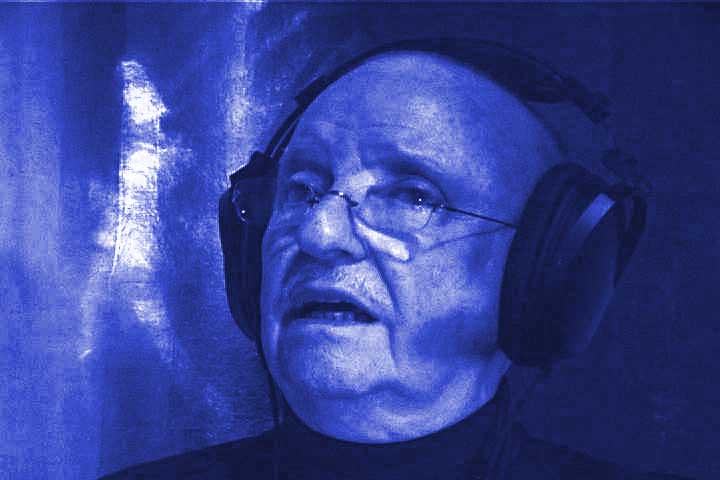
Monday, October 15, 2007

AF tribute by Johan Stern


One time at Juilliard I had to take the baroque cello owned by the school to a violin maker for some adjustments and new strings. I was playing some chamber music with Albert and another student of his, the oboe-player Andrew Adelson, preparing some trio sonata for his recital. Albert suggested that I should take the cello to William Monical at Staten Island and he asked me if I would like him to join my trip – of course, I was delighted to accept his offer! From the first day I came to New York I was mesmerized by the city and used most of my spare time to explore it. In books like E.B White’s Here is New York or Singer’s Enemies unfolded all those typical New York stories of completely different worlds taking place just some blocks away from each other. It all felt so different from Europe, not to mention Sweden where I grew up!

We took the subway down to Battery Park, Albert lecturing about the history of the New York Subway, the different private lines long before the Metropolitan Transportation Authority. I couldn’t have found a better guide than Albert; with all his knowledge about the city he was the perfect companion, telling amusing stories, sometimes flavored with indecent details of the secret liaisons taking place in the empty driver’s compartments during roaring rides underground. We boarded the ferry and smelled the breeze from the sea and Albert’s stories changed, describing the sight of the QE and the other great ocean-liners and long before that, how poor and oppressed people from Europe approaching New York with hope of freedom.

Another great memory is how Albert in his Performance Practice class at Juilliard made a thorough analysis on Madonna and her Marie Antoinette remake of “Vogue” from the MTV Video Music Awards 1990. It was one of his many unique qualities – to see and understand a brief moment of what most of us would think was nothing more than superficiality, and understand the very human meaning of it as an expression – far out or "hot shit on toast under glass" as Albert would call it if it really was something very special. How an artistic statement always has many "historical siblings" – a direct link to history, and the need of generation after generation to retell it.

I am very grateful to have so many good memories around Albert's: all the discoveries in our coachings with the TestosterTones playing the Brahms trios, our sudden concerts! – his great trust in us, his warm hospitality, our exit subito when he suddenly felt tired and we, totally unaware of how time flies absorbing scents and sounds of the enchanted gatherings around the Rendezvous Lounge – overtaken and aroused scattering into the city night. I have written him many times over the years, just small notes on postcards from my tours and travel. It was always so natural to share a new moment of experience with Albert.

To put words to what Albert represents is very hard but I can honestly say that still 15 years after my great couple of years at Juilliard, he is still with me on a daily basis in my musical life.

Tuesday, October 9, 2007

Understanding the Invisible Art

[In the late 1980s and early 90s, Albert Fuller conceived and produced a television pilot called "Understanding the Invisible Art" in the hope it might provide an outlet for Helicon on PBS. Alas it didn't, but the materials he created give a wonderful distillation of his thoughts. The following is an excerpt from the introduction. More to come.]

General introduction to program:

Those of us who toil in the field of music know that we are somehow different from artists of other disciplines. The eye is involved in painting . . . in sculpture . . . in dance, but music depends entirely on the ear. It's an invisible art. That invisible essence of music is nowhere better described than in the poem "Peter Quince and the Clavier" by Wallace Stevens, the 20th-century American Poet.

Just as my fingers on these keys
Make music, so the selfsame sounds
On my spirit make a music, too.

Music is feeling, then, not sound;
And thus it is that what I feel,
Here in this room, desiring you,

Thinking of your blue-shadowed silk,
Is music.


It is not then just a coincidence that Galileo, considered the founder of modern science, was himself the son of a musician. Just at the beginning of the 17th century, when the new musical style of opera was created in Italy, the world received Galileo's convincing notion that there are invisible worlds "vital to our being, that cannot be comprehended by our unaided senses"

Since then music has grown into the vast world that we know, that can be viewed as the invisibly expressed art of the imagination. Today at the end of the 20th century, all our new technological tools show us ever newer realities that our other senses cannot perceive. Therefore we are not surprised to learn that music has always been a window into the unconscious mind.

We cannot be surprised as well with the notion that the most important musical instrument of this entire century was invented over a hundred years ago by Thomas Edison. That instrument is, of course, the phonograph.

The invisible power of electricity has allowed us to make the acquaintance of and to experience through recording ever increasing amounts of music of the past. Doing this unveils whole new, thrilling layers of our psychic inheritance.

Many of us musicians have found that by using the instruments and techniques of playing them that the composers of the music had in mind, we musicians can come even closer to the psychic thrill of perceiving something from the composers' unconscious minds. When you add to that the social contexts of the past, that is the art, the politics, the behavior of society, the ways people danced, the architecture and literature that they held dear, when we focus on all that, then we feel enabled to experience our music in a way that makes us feel still closer to the composer.

Aston Magna's Notice in the New York Times

For Daniel Stepner's tribute to Albert in the New York Times, click here.

Saturday, October 6, 2007

Boston premiere of Albert's movie


Friday, October 12th, 8PM
Marsh Chapel
735 Commonwealth Avenue
Boston

The movie of which Albert was the genesis and remains the heart, soul and star, Apparition of the Eternal Church, will have its Boston premiere this coming Friday, courtesy of the Boston University Messiaen Project (BUMP--an acronym Albert enjoyed) and its international conference "Messiaen the Theologian." After the show, conference organizer Andrew Shenton will perform the Messiaen organ work of the same name, and there will be a round-table discussion and Q&A with Andrew, Boston Globe correspondent David Weininger and me, hosted by BU's Victor Coelho.

When I interviewed Albert for the movie (the first of 115 interviews), I had no idea he'd ever played a note of Messiaen. So it was one of my biggest surprises and the movie's happiest serendipities that he had been the first to perform Messiaen in the National Cathedral back in 1950, when this music was hot off the press.

Albert figures prominently in the trailer: apparitionfilm.com/assets/ApparitionTrailer20070209QTb.mov

This is the schedule for the BUMP conference ("Messiaen the Theologian"):
http://oliviermessiaen.net/bump/conference-2007/program
(The following night, with Messiaen scholar Luke Berryman, I'll be giving the Boston premiere of a newly published Messiaen work for violin and piano, the Fantaisie.)

Here's the link to the movie's official Website: apparitionfilm.com

Here's the poster for the Boston premiere: paulfesta.com/Boston.htm

And here's Albert's bio on the movie site: apparitionfilm.com/cast/fullerbio.htm

Tuesday, October 2, 2007

Albert Fuller Tribute on WQXR

Click here for an MP3 of a tribute to Albert Fuller broadcast on WQXR, Thursday, 27 September 2007, just before 1:00 p.m.

Tribute by the tenor, Robert White in The Juilliard Journal

"The Incomparably Iconoclastic Albert Fuller" by Robert White

For the Juilliard Journal article, click
here.

photo: AF with Paul Festa and Pedja Muzijevic


This was April 1993 after a Helicon symposium. If I ever find Albert's compendium of Helicon programs I'll look up what we played.

Monday, October 1, 2007

BACH RECORDING RATIONALE by Albert Fuller

In preparation for his 1992 recording of harpsichord music by J. S. Bach, Albert produced the following document as a conceptual guide.


BACH RECORDING RATIONALE

I have long felt that all the music I love is in some way a direct metaphor for the human activities of singing and dancing, the gifts of the Muses!

Bach, a personality whom I adore, was, according to this reasoning, likewise inspired in his human physicality by his own understanding of the human need for singin' and dancin'.

The raison d'être of this present recording is to show my own, personal understanding of how this proposition illuminates the harpsichord works that Bach himself created and in what he loved in the works of others.

The Italians first developed the violin as a surrogate voice, allowing those who could not sing to possess the high c's of the sopranos on the stages of their beloved opera houses. Inspired by this idea of surrogate voices and with Vivaldi as his model, Bach demonstrated that the concerto concept, normally realized by seven to a dozen people, could also be a viable expressive vehicle for one person alone at the harpsichord. This Italian Concerto in the Italian style was the result.

At the same time, the French had long been seized by balletomania, the love of dancing. Louis XIV's passion furieuse influenced every house of noble pretensions throughout Europe for almost three hundred years, permeating the entire diplomatic world with the need to dance. Hence the appropriateness of such a work here as the French Set (Suite) of dance pieces with a prélude.

The desire to play the fugal game of musical interweaving came to Bach from German organ writing, derived and developed from vocal church music styles. Unwilling to present the unprepared listener with such a demanding mental musical chess game as is a fugue, Bach wrote introductions or préludes for each of these fugues. The preludes serve as "stage settings" for the fugal interplay. Often these scenes were inspired by images from Bach's own contemporary world: in the F minor, the operatic stage of the aria; in the D Major, the orchestral music of a great potentate.

Bach, however, was also a homebody, with two wives and twenty children . Think how he must have understood diapers and the joys and griefs of siring and supporting his own children through their many young deaths as well as their lives, some quite ordinary and some others fueled by their own, personal musical genius. Therefore, the private music, beloved by his adored wife, Anna Magdelana, and played by his own children forms the most personal sector of this recording. With two exceptions, all these works are dance pieces loved by his family. Louis XIV's beloved Menuet, the polonaises of the internationally set, a bagpipe piece, an aria, and finally a prayer closes this section and this record.

The order of the final section, Bach at Home, has not been decided. The pieces are arranged here in their numerical order in the book. A more affective, emotional arrangement will be conceived to close the recording.

Saturday, September 29, 2007

photo: Soigné gathering, 15 Sept 1957, Oak Room of the Plaza

The Washington Opera is born.

Of course, Albert is in the center of this lively bunch!

Left to right: Tommy Dunn, Connie Mellen, Peggy Smith, Day Thorpe, Albert Fuller, Margaret Cox, Gregory Smith, Elinor Douglas, Paul Callaway.

Update: See BG Thorpe's comment for details.

Friday, September 28, 2007

"Albert Fuller--an appreciation and goodbye" by the harpsichordist, Andrew Appel

I first heard Albert Fuller in a recital of French harpsichord music (he was a pioneer in the repertoire) at Hunter College in 1967. A series of concerts by the world’s leading players presented him alongside Gustav Leonhardt and a few other American colleagues. I was 16 and from his first notes I was seduced by vitality and luxury. I thought, “I want to do that!”

When I returned to New York from studies abroad in 1973, my route was to the Juilliard School and to Fuller’s studio. Albert asked me to meet him for tea at his apartment on West 54th street. I arrived with the attitude of a boy who had moved through the disciplined and socially structured world of a European conservatory. I had never addressed a professor by his first name. The boundaries were clear, the education wonderful and focused.

I rang Mr. Fuller’s bell and was dumbstruck when he opened wearing only his white underwear. Just out of the shower he ushered me in to the living room and asked me to wait, to look around, to play his harpsichord.

That evening he invited me to join friends after one of his concerts and introduced me to New York Szechwan Chinese food at Sheila Chang’s, one of the city’s best.

From that moment on, encounters, lessons, voyages with Albert always introduced and challenged. He demanded reaction and he gave catalyst, he required balance but offered constant opportunities for growth. Life was about interaction. MUSIC was about interaction. Albert demanded that life in all its facets and forms found its way into music. Music needed to illicit a reaction from the listener. Short of that, our performances were banal, roughage, waste.

He moved me away from over-sophistication and inaudible subtlety in my playing yet invited me to events where I could drink fine Champagne and look at Rembrandts and Monets. He helped teach me that the experience of golden and precious art must be married to our experience of being animals, natural, primal. He immersed himself, bringing in his pupils, in pre-Freudian art and made it rich in meaning through his modern understanding of the mind and heart.

He showed me how to talk to an audience about the most distant aesthetics and moments in history without ever insulting them with condescension. He taught me that the glass of champagne and the Rembrandt were to be there for everyone and that it was our mission to make this possible, to open hearts and minds and opportunities.

It may be the case that even before I began my work with Albert, I was this type of musician and person. It may be that Albert and I found each other and coincided in a way that will always make me feel filial gratitude and love, and with his loss, a large open space that can never be filled. But ask his other students. Ask the harpsichordists from James Richman and Ray Erikson to Charlotte Mattox. Ask the instrumentalists who worked with him in those early adventures into repertoire and instruments (gut strings and light old bows, wooden flutes and early oboes) like Ryan Brown, Linda Quan, David Miller. Ask the singers who enjoyed the cantatas and arias worked out together.

Albert left a trail of committed, inspired, intelligent, engaged artists and for each of them, Albert Fuller represents a moment or many moments of light.

This week I went to visit Albert on his deathbed, hospice care in place at home, and cared for by two dedicated and loving friends, Patrick Rucker and Jim Roe. It was painful to see a man of his vitality no longer IN life. I held both Albert’s hands and hoped that he could feel that the blood running through him, also ran through me; that I would continue, if not nearly as well, the work he did so beautifully and generously in his life. And then I noticed that he was wearing only his white underwear.

Alex Ross mention and link

This blog got a very nice mention and link from New Yorker music critic Alex Ross Wednesday on his blog "The Rest Is Noise."

Thursday, September 27, 2007

Obituary in the Boston Globe

The Boston Globe on Wednesday published this abbreviated version of the New York Times obituary.

(update) Hannah Walsh, Gregory Smith's granddaughter

Anyone who knew Albert knew the late Gregory Smith (a.k.a. Grisha) through Albert' frequent and affectionate Grisha stories. In addition to being a great friend, Gregory was instrumental in launching Helicon and remains, with Alice Tully, a Helicon Muse (it's on the letterhead).

Here are some pictures and correspondence from the Smith family:


Hannah Walsh (fka Hannah Smith) writes: Gregory was a very dear friend of Albert's and I have no doubt they are now reunited in heaven. This has been the one happy thought that has gotten me through today after I stumbled this morning across Albert's obituary in yesterday's Boston Globe.

I have missed Albert deeply since leaving NYC in the summer of 2005. He has been a part of my life since I can remember, as a sort of second grandfather at first, and then a friend and storyteller who could keep my grandfather's memory alive in my mind and heart. I could go on and on about what Albert's stories of my family have provided for me.

I've attached a picture of Albert, me and my firstborn son (Jedidiah). I think this picture was taken in the spring of 2004 in front of Nick & Toni's (where else?).


Mardie Smith (Gregory's daughter-in-law) writes: Hannah was very close to her grandfather and developed a very close relationship with Albert after Gregory’s death. In this photo, she is pregnant with Gregory’s second great-grandson, Owen. It was taken two years ago in front of Shun Lee by Albert’s apartment. Jedidiah is now four years old.

(UPDATE)
Grisha was a certainly a fascinating father-in-law. Our visits with him usually coincided with visits from Albert, Zoltan, Bobby White, C. Ray Smith and a few others. Dana and I have been together for 35 years so I entered the scene at the summer home in Stonington, Ct and went on to those in Maine and East Hampton. You can imagine the settings, the dinners, the stories, and the laughter! But Albert was his best friend; Gregory once told me that he and Albert spoke on the phone every day, no matter where they happened to be in the world.


"Bist du bei mir"

WQXR 96.3 FM in New York City will play Albert's version of "Bis du bei mir" from his "Bach for Harpsichord" CD today at 12:40 p.m. They will program additional performances by Albert Friday in the late afternoon. (Thank you Hester Furman.)

This is from Albert's program notes:

"The group closes with another prayer, one for companionship at the end. This prayer, Bist du bei mir, was sung by Hughues Cuenod countless times in concerts that he and I gave together. In remembrance of those magical times when I accompanied him, varying my figured-bass realization as we improvised together, I have made a transcription of this vocal work for harpsichord alone. In it are gathered the feelings of melodic and accompanimental spontaneity that Hughie and I enjoyed, along with some of the tender feelings that guided us along our way." --- Albert Fuller

Recorded: 20-22 April 1992, The Presbyterian Church, Rye, NY
Harpsichord: Thomas & Barbara Wolf

Wednesday, September 26, 2007

photo: Albert Welcomes Guests to Helicon


For 21 years, The Helicon Foundation presented a series of intimate chamber music concerts performed on period instruments in Albert Fuller's apartment near Lincoln Center. (The series moved across the park in 2006-7 and continues there in our new home, The Kosciuszko Foundation, 15 E. 65th Street.) His generous music room, which has 22 foot ceilings and seats upwards of 80 (70 comfortably, 90 when certain stars performed), took the appellation, The Helicon Studio for these events, becoming "The Rendezvous Lounge" afterwards, as musicians and music lovers mingled in the afterglow. (Cue the conga music, thank you Mr. Kozinn.)

Here is Albert welcoming guests at the second floor entrance probably around 1999. Vivacious Helicon Members Dennis Reiff and Patty Otis Abel took the photo.


photos from 1992 and 1993

In 1992, Albert led and played this concert by the Helicon Ensemble in Weill Hall.


Playing on gut strings in public scared the daylights out of me, but I was grateful to Albert for the opportunity nonetheless.


After Alice Tully's stroke in 1993, Albert brought his students the Italian pianist Marco Rapetti, the Swedish cellist Johan Stern and me (whom Albert had collectively introduced to his Helicon audiences as the "Testosterone Trio," or "The Testostertones") to Miss Tully's apartment in the Hampshire House to play for her. I'm almost certain we played Brahms, though Albert has it as Schumann on p. 147 of his Alice book, among other elaborate improvisations on the facts of that extraordinary afternoon.

Tribute by the classical guitarist, Eliot Fisk

The passing of my beloved friend and mentor, our adored Albert, fills me with sadness. He was an indispensable musical model and inspiration, of course, but so much more for all of us . . . He was our guru of love and of the sacredness of human sensuality, of our right to try to be happy in spite of everything. He gave us all so much. He will truly always be "UNFORGETTABLE" (music of Nat King Cole), and his beautiful loving spirit will be with us always.

Article by David Fuller, Professor Emeritus at the State University of New York at Buffalo

For half a century, I have watched happy faces fall as they tell me how pleased thay are to meet me and how much they have enjoyed my recordings, my concerts, and even my books, and I tell them, I’m sorry, you’ve got the wrong Fuller. It happened easily, since we moved in many of the same circles, he was less than a year older, and I even played the harpsichord, sort of. In fact, that was how we met. It was 1953-4. I had come back from three years abroad and had developed enough curiosity about harpsichords to want to get one. Since I was knocking around Boston and Cambridge, I bought one of Hubbard & Dowd’s first four instruments, already second-hand, and joined the little club of which Thomas Dunn and Albert were the principals. Albert had just come through the hands of Ralph Kirkpatrick at Yale, and was willing to give me lessons (like him, I had begun as an organist). The setting of those lessons, spaced out informally over two or three summers, was one of the great shingle-style “cottages” at Manchester-by-the-Sea on Boston’s north shore, belonging to the brilliant and infinitely cultured Gregory Smith and his family, one of Albert’s very closest friends from his Washington days to Gregory’s death. I never spent more than a night or two there for my lessons, but those visits were non-stop party-time with non-stop music. Albert, who spent summers there, christened it “Nerve-Ending-by-the-Sea,” exactly right for bunches of high-powered people living on the edge. He was the Smiths’ window onto the world of professional music, to which in those days their social position decreed that they must ever remain fascinated outsiders. Albert was then playing on and off with the New York Chamber Soloists, and I remember one party that culminated in a couple of Brandenberg Concertos in the living room with both Albert and Tom at their harpsichords (which normally lived in a sort of conservatory they called the “tile pile”), the orchestra, and invited guests. No matter whom the house-guest list included during my visits, it was clear that that it was from Albert that the fun and the life radiated.

This capacity to illuminate whatever he touched reached its culmination in the enterprise that he called “Aston Magna,” after the Berkshire estate of Lee Elman where it began in 1972. An idea of its pioneering importance in the period-instrument movement in this country can be had from the article in The New Grove Dictionary of Music and Musicians (2001). I knew it for the interdisciplinary Academy it spawned in 1978, and at which I lectured on aspects of French harpsichord music in 1979, 1980, and 1982. Why French? Because I had been sufficiently ravished by Albert’s playing of this elegant and elusive music in the old days at Nerve-Ending to make it my career and write my dissertation and a great deal more besides on it—and to dedicate an edtion of music by Armand-Louis Couperin to him (A-R Editions. 1975, and still in print!). The original mix of disciplines and outlooks at Aston Magna was enormously stimulating, but what was so peculiarly “Albert” about life there was the cooking. He managed to find chefs who could turn out three meals a day for weeks, each one different and each one sensational, and this for dozens of people in an institutional setting. He was a first-class cook himself, by the way, and developed a particularly violent passion for Chinese food, becoming a close friend of the New York restaurateur Sheila Chang and even learning a bit of restaurant Chinese to use with waiters. I had a lot of this cooking, since for years I used his apartments at 162 W 54th St. and 27 W 67th St. as my New York hotels. In 1968, I stayed with him a few days in a rented house in Fire Island Pines, whither he had brought a clavichord on which to prepare his recording of Bach’s E-minor partita. I shall never again be able to hear that toccata without the remembered sound of the surf almost drowning out the whisper of the clavichord.

The reader who would like to experience something of the rich, enveloping personality of this extraordinary man can find it reflected in a remarkable and engaging way in his memoir of Alice Tully (Urbana and Chicago: University of Illinois Press, 1999). For the sake of his memory I hope that it, too, is still in print.

David Fuller (no relation), September 23, 2007.

Blog posting by a Helicon Member. (Thanks!)

I love music -- many, many different kinds -- and one place I have had the honor to be for a few short years is at the performances of The Helicon Foundation, a chamber music society that usually meets in New York City, always in a small space and always with astounding musicians playing pieces that (frequently) I have never heard.

Albert Fuller was the founder of this society, as he had also been of Aston Magna. Every performance I have been at was magical.

Posted by olympiasepiriot.

Letter from the pianist Graham Johnson to Albert's dear friend, the tenor Robert White

9/24/2007

Dearest Bobby,

Albert was a great musician and a marvellous man. He had a level of perception and understanding of the "bigger picture" of both life and art that made him an invaluable mentor and an enchanting if exigent friend. His ability to understand the significance of someone like Alice Tully in the history of the arts in New York, and within the history of that great genre, the mécène, is typical of his perspicacity. He sought to draw bigger and more lasting conclusions from the details of life he experienced. He was always the philosopher. There are literally hundreds of young men and women, perhaps like me no longer young, who learned to know themselves and to love themselves a little better through Albert's artistic and philosophical intervention. He believed in the power of intervention and the power of art, and as such was a partaker of the mysteries as well as a creator of them. He could change a life or turn it round over cocktails.

Of course he was an early music specialist and he will go down in history for his work in the fifties and sixties with people like Dowd regarding the great harpsichord revival that fuelled a thousand other developments in all walks of musical life. But he retained voracious interests in ALL aspects of music-making and he greeted those whom he regarded as talented with an openness of heart that will always be unforgettable. I shall never forget him and his sometimes irascible kindness, Like all great artists he was capable of being moody and self-absorbed, but he remained to the end someone who respected talent, when he saw it and found it, as an utterly sacred thing to be nurtured, helped, advised and encouraged. One of the greatest teachers, thus, that I have ever known. After an evening in his company when he was on form, one could be lifted to another place. Whatever our problems we were artists and part of a family that nothing could destroy. He made one feel part of a blessed community of kindred and supportive spirits.

He treasured a signed portrait of Mae West I bought him at the Argosy Bookstore after staying with him in 2000 with Brandon. Couperin and Aretha Franklin, Alice Tully and Mae West, that was our incomparably curious, incomparably iconoclastic Albert. I joked with him that the great art gallery in Vienna must have been named after him .... the Albertina. It should have been. Goodnight dearest friend.

Graham